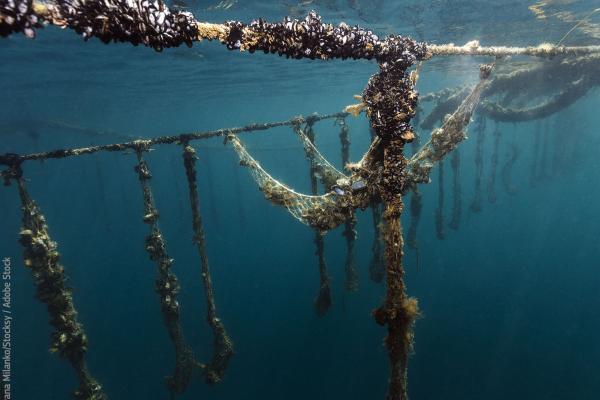
Aquaculture, unlike fisheries, is not an exclusive EU competence but it is still regulated by EU rules for environmental protection and health.
In 2013 the Commission adopted non-binding strategic guidelines for the sustainable development of EU aquaculture, which served as the basis for the development by EU countries of specific national strategic plans for aquaculture. The Commission works with EU countries to share best practices. Funding from the European Maritime and Fisheries Fund has supported the sustainable development of aquaculture.
New strategic guidelines were adopted in 2021 and EU countries have reviewed their national strategies in light of the new guidelines. Funding will continue from the European Maritime, Fisheries and Aquaculture Fund (2021-2027).
Objectives
The European Commission wants to help develop the EU aquaculture sector that ensures the supply of nutritious, healthy and tasty food with a low environmental and climate footprint, creates economic opportunities and jobs, and becomes a global reference for sustainability and quality. Its policy aims specifically to
- building resilience and competitiveness
- ensuring the participation of the sector in the green transition
- ensuring social acceptance and consumer information on EU aquaculture activities and products
- increasing knowledge and innovation in the EU aquaculture sector


Actions
- 2024Recommendations and good practices
In April 2024, the Commission published two documents to help EU countries promote sustainable aquaculture growth.
- 2022Towards a strong and sustainable EU algae sector
In 2022, the Commission published a communication entitled ‘Towards a Strong and Sustainable EU Algae Sector’ (COM(2022)592).
- 2021Strategic guidelines for a more sustainable and competitive EU aquaculture
In 2021, the Commission published its new strategic guidelines (COM(2021)236) for a more sustainable and competitive EU aquaculture.
- 2013Strategic guidelines for the sustainable development of EU aquaculture
In 2013 the Commission published the strategic guidelines (COM(2013)0229).
- 2009Building a sustainable future for aquaculture: A new impetus for the Strategy for the Sustainable Development of European Aquaculture
In 2009, the Commission published its second communication on aquaculture (COM(2009)0162).
- 2002A strategy for the sustainable development of European aquaculture
In 2002 the Commission published a communication entitled ‘A strategy for the sustainable development of European aquaculture’ (COM(2002)511).
Rules
Aquaculture is a complex activity that involves many elements, from the use of space and water, taking care of the health and welfare of animals farmed, or ensuring the safety of products used in the farming process (such as feed or veterinary treatments) for the environment and human health.
There is a large body of EU legislation covering these issues, which aquaculture producers have to comply with. For example, to protect aquatic habitats from impacts of non-native or locally absent species, specific rules exist on their use in aquaculture.
In addition, EU legislation and policies for organic production also apply to aquaculture. These rules promote, through certification and labelling, aquaculture that complies with stricter production requirements on environmental impact and animal welfare, as well as limited and regulated use of inputs.
The main responsibility of the application of this legislation and the management of aquaculture activities lies with public authorities in the different EU countries.
To allow EU countries to support their producers while respecting EU competition rules and other policies, specific state aid rules apply to the fishing and aquaculture sectors.
Collaboration
Through the open method of coordination, the European Commission helps to identify problems and facilitates cooperation and policy coordination between EU countries.
The Commission regularly facilitates the organisation of technical seminars. During these seminars, experts have the opportunity to exchange experiences and good practices on national measures to support the sector. These practices range from licensing systems and allocation of space to the marketing of aquaculture products.
The Aquaculture Advisory Council consists of sector representatives and stakeholders. It provides EU countries and EU institutions with recommendations on sustainable aquaculture.